A yoga brand should give each mat shape and color a clear product role instead of releasing unrelated designs. Start with one core format, add one or two distinctive shapes, and use a controlled color system so the range looks intentional across product pages, studios, and retail displays.
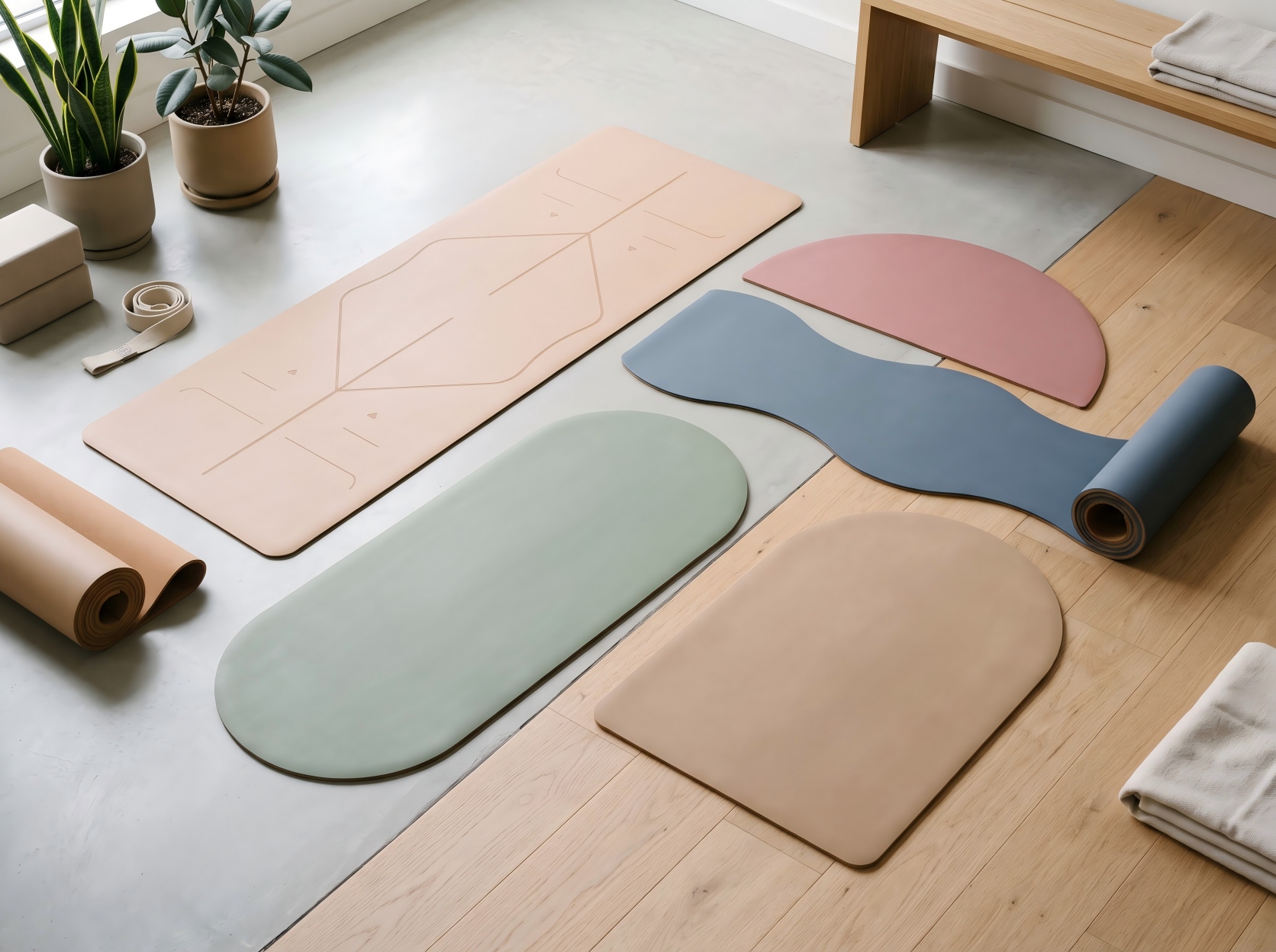
A yoga mat collection is a group of mats organized by a shared product strategy, such as use case, shape, material, color family, or price position. Second Page Yoga’s catalog includes special-shaped yoga mats made with PU and natural rubber in oval, arch, wave, capsule, curved, and half-round forms, alongside multiple color and custom-logo options. These choices must still be confirmed model by model.
What should the core product do?
The core product is the mat that explains the brand most clearly. It should be easy to photograph, describe, store, and present in a retail listing. A conventional rectangular mat can serve this role because its format is familiar, while a special-shaped mat can become the collection’s signature design.
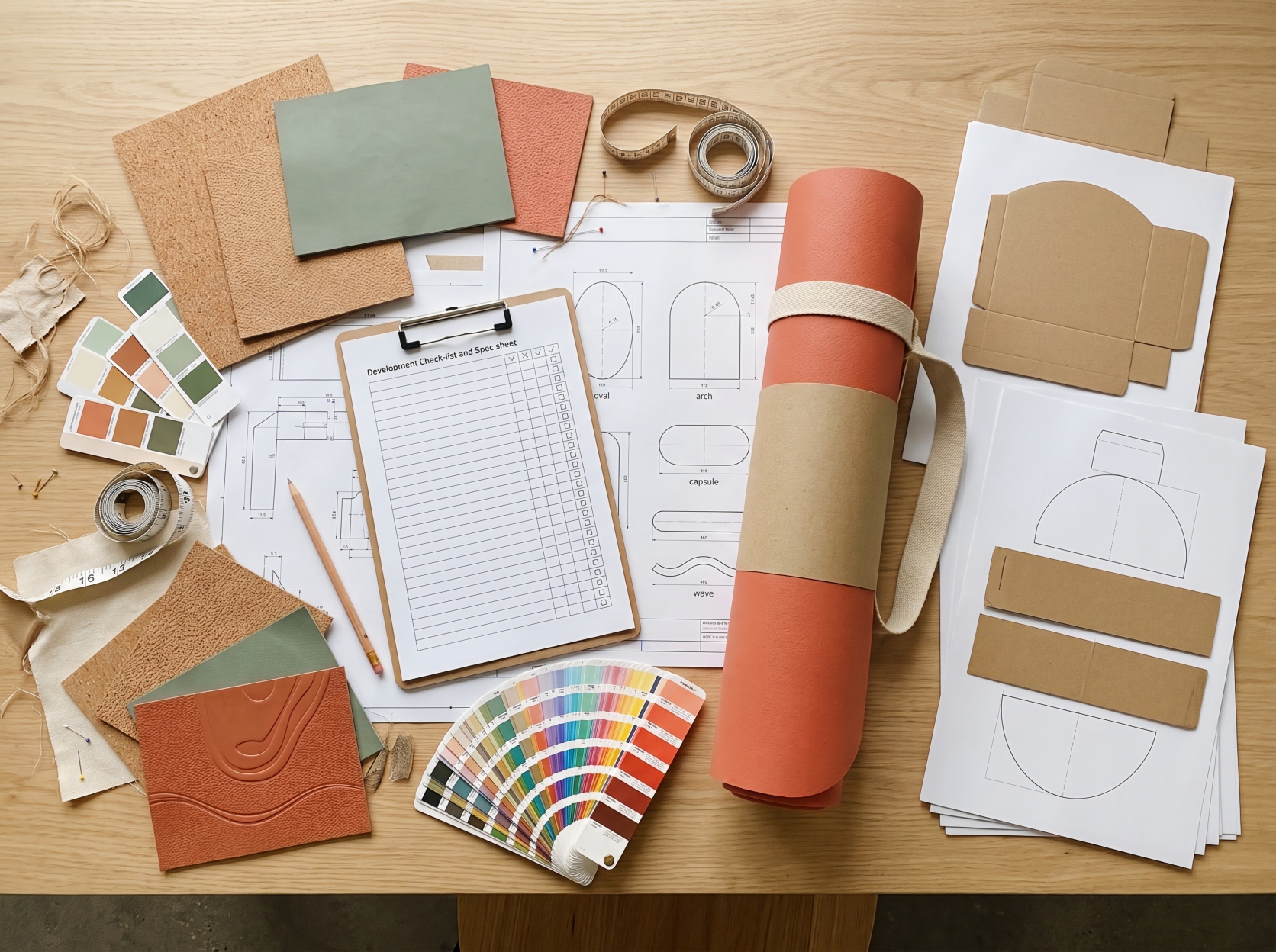
Before requesting a quotation, define the exact model, surface material, backing material, thickness, size, color, logo method, and packaging requirement.
A core-product brief should answer four questions:
•Who is the intended user?
•Where will the mat be used: home, studio, travel, or retail promotion?
•Which visual features must remain consistent?
•Which specifications can be customized?
When should a brand add a special shape?
A special shape is useful when it communicates a design idea or creates a recognizable product silhouette. It should not be added only because it looks different in a product grid.
Second Page Yoga lists special-shaped PU and natural rubber products, including oval, arch, capsule, wave, curved, and half-round designs. Selected product pages also describe custom logos, multiple color options, and custom printing. This shows that shape and branding can be developed together, but the exact options need confirmation for each model.
Collection role
|
Design direction
|
Main buyer question
|
Information to confirm
|
Core mat
|
Conventional format
|
Can it serve most customers?
|
Exact size, thickness, material, color, and logo method
|
Signature mat
|
Oval, arch, wave, capsule, or curved form
|
Does the shape make the brand recognizable?
|
Model-specific dimensions, production method, and packaging
|
Studio or program mat
|
Consistent shape and color family
|
Can several units look coordinated?
|
Color consistency, quantity, storage, and care instructions
|
Limited design
|
Distinct print or seasonal color
|
Can customers understand its role quickly?
|
Artwork, sample, MOQ, and repeat-order conditions
|
When requesting a sample, send the selected model, color reference, logo artwork, and desired surface finish. Keep the approved sample for repeat orders.
How do shape, material, and branding work together?
Material is the physical surface and backing construction of a mat. Branding is the application of a company’s visual identity through color, printing, engraving, or another approved method. These decisions interact with each other.
The catalog includes PU and natural rubber combinations, suede and natural rubber products, cork and natural rubber products, and TPE products. A brand should not assume identical print appearance, grip behavior, cleaning requirements, or color expression across surfaces. The selected model page and approved sample should define what can be promised.
For brands considering custom logo PU yoga mats, the artwork brief should specify logo position, logo size, artwork format, color references, and the branding method offered for that model. A product page may show a custom-logo option, but the final method, sample requirement, cost, and MOQ still need confirmation.
What should be included in the collection review checklist?
Before approving a collection, check the following:
•Does every shape have a defined customer or product role?
•Can the color family be explained in one sentence?
•Are the material and surface treatment confirmed by model?
•Are size, thickness, weight, logo, and packaging details in the specification sheet?
•Has a physical sample been reviewed before mass production?
•Can each shape be photographed clearly?
•Does the packaging fit the selected form?
•Has MOQ been confirmed for the exact model, color, logo process, and packaging?
•Can the collection expand without losing its visual logic?
This checklist supports a clearer wholesale inquiry because the supplier receives a defined product brief. Second Page Yoga’s pages indicate OEM/ODM and custom-logo options, but commercial details should be confirmed for the selected product.
Frequently asked questions
1. Should a new yoga brand start with one mat shape or several?
A new brand can start with one core shape and one signature shape. This creates a clear product hierarchy while giving customers a meaningful design choice. Adding many shapes at the beginning can make photography, packaging, inventory, and product descriptions harder to manage. The final choice should depend on the selected models, customer profile, and confirmed production conditions.
2. Are all colors available for every PU or natural rubber yoga mat?
No. Color availability should be confirmed for each model. Second Page Yoga lists multiple color options on selected product pages, but this does not prove that every color is available across the catalog. Confirm the exact model, color reference, surface treatment, logo method, sample requirement, and MOQ before publishing a color collection.
3. Can a special-shaped yoga mat use the same packaging as a rectangular mat?
Not necessarily. Oval, arch, wave, capsule, curved, and half-round forms may require different protection, wrapping, or retail presentation. Confirm the rolled or packed dimensions for the selected model and test the packaging with a physical sample. Packaging should be treated as a model-specific requirement rather than a universal assumption.
Build a clearer yoga mat collection
A useful collection is not defined by the number of shapes or colors. It is defined by whether every product has a clear role, whether specifications are confirmed for the exact model, and whether customers can understand the differences quickly.
Review the product options to compare possible directions on the Chinese Yoga Mat Manufacturer —— Second Page Yoga. For a wholesale or private-label quotation, contact the sales team with the selected model, quantity, color, logo method, packaging requirement, destination country, and expected order date.
Email: info@secondpagetech.com.
 Room 701,Block C, Zhonghuancity CBD, Shushan District,Hefei,Anhui Province,China.
 0086 181 5606 3146


 Deutsch
 English
 français
 español
 العربية
 한국의


